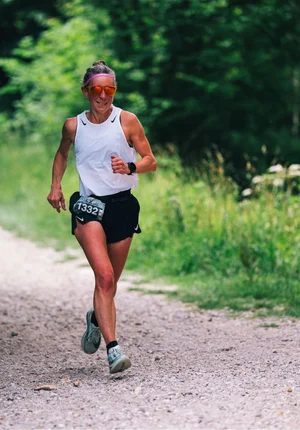
Ladybower Trail Half Marathon: My Race Report
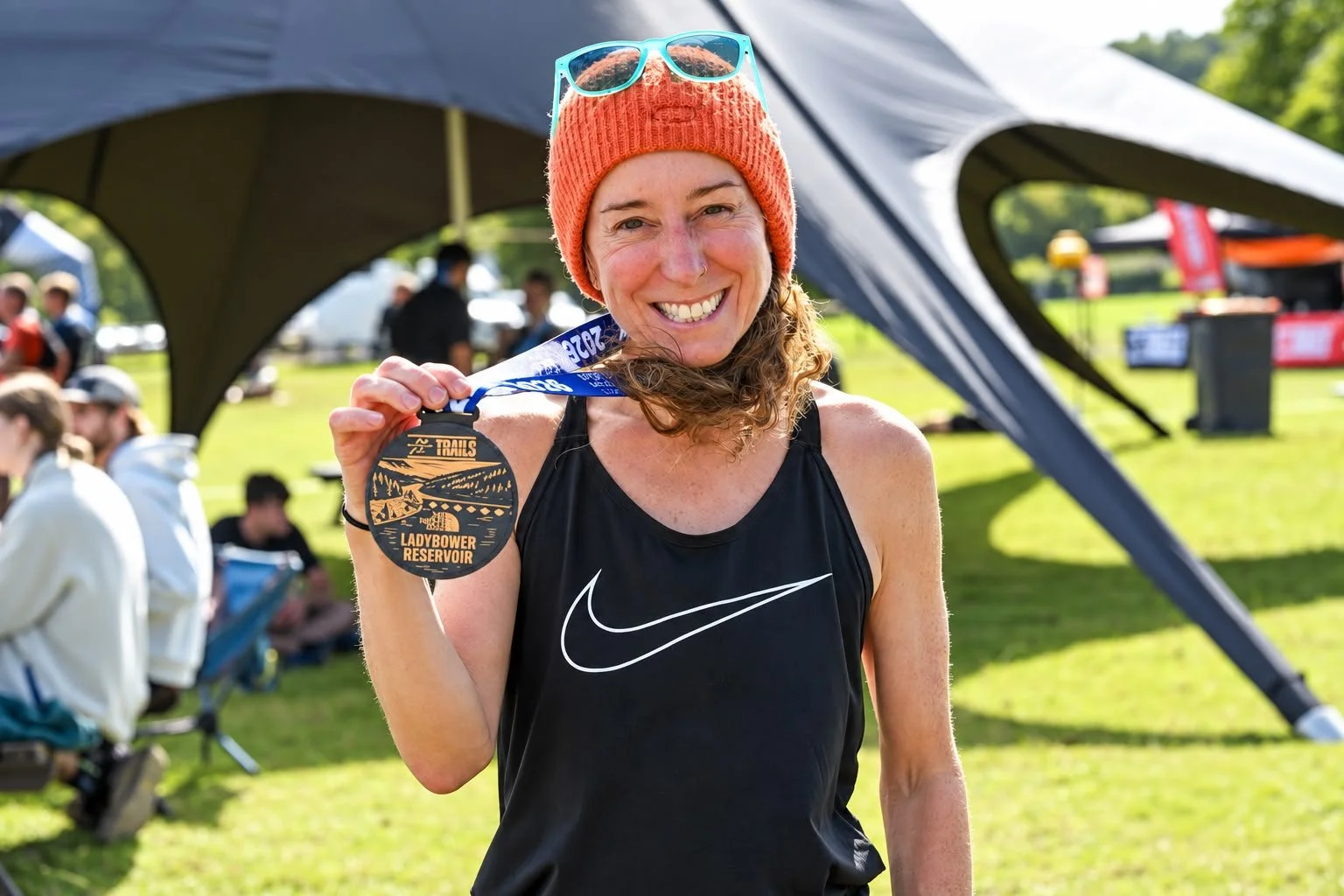
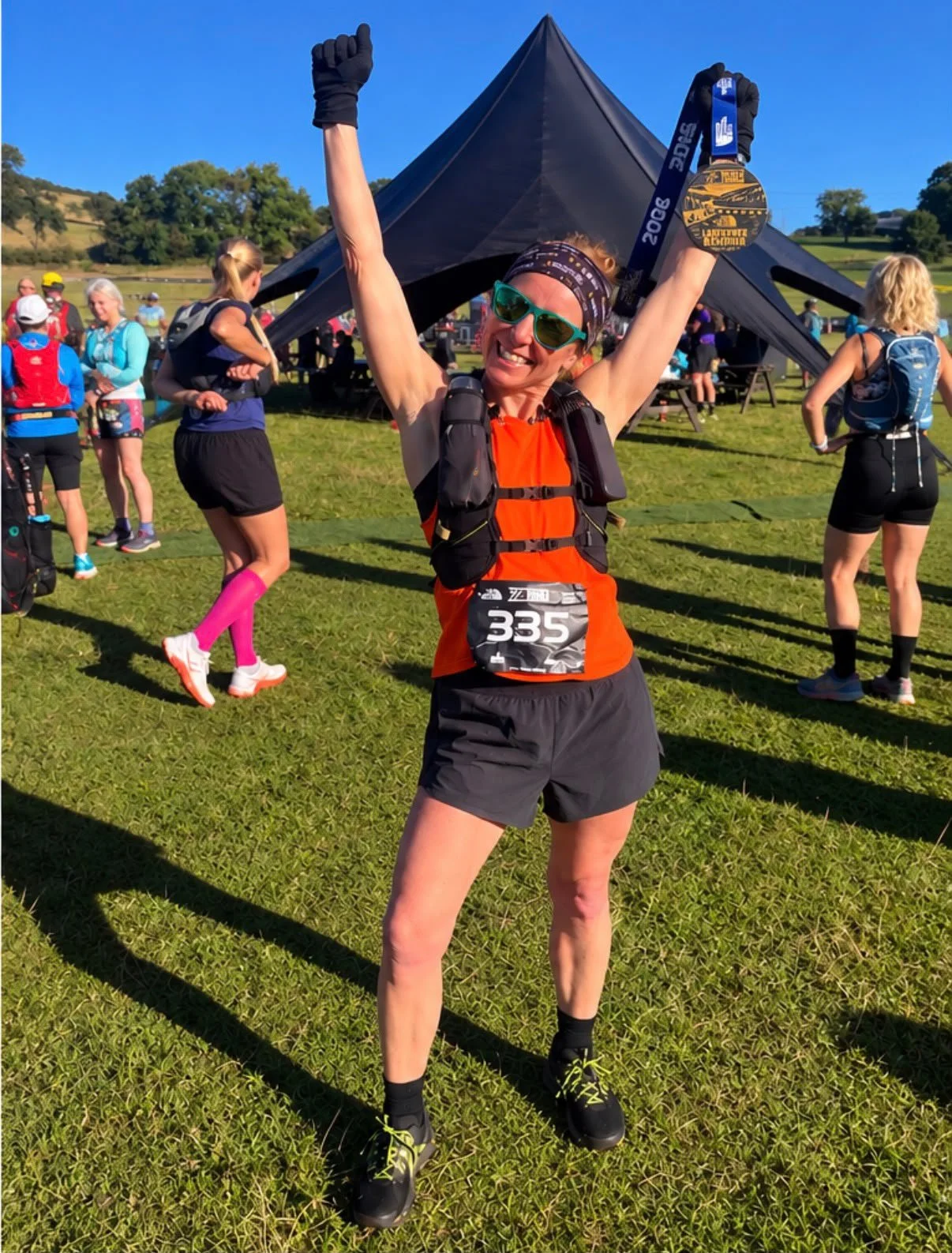
Claire with her Ladybower Medal
What 900m of Climbing Really Feels Like…
The RunThrough Ladybower Trail Half Marathon is a tough, hilly half in the Peak District, with around 900m of climbing, steep technical sections and some brutal downhills. I ran it in September after a three-month training block, finished second in my age category, and loved it. If you love the hills and you're happy for your quads to take a battering, I'd absolutely recommend it.
Why Ladybower?
I've missed being on the hills. Trail running and trail racing were my first love. When I lived in Scotland, the trails were literally right outside my door, and I've felt the distance from that.
Last year, while preparing for the New York Marathon, I did a load of trail races. They got me fit, they got me strong, and I love being out for the day. So this year I wanted to get properly back into it. In July I ran the Belvoir Castle Half Marathon, which was on trail, but I wanted something hillier. I wanted a challenge. I wanted to feel the burn of the hills.
Ladybower ticked every box. It's in one of my favourite parts of the world, an hour from home. And one of my clients, Abbie, had already entered, which is partly what inspired me to look it up in the first place.
My three-month training block
After Belvoir in July, I wanted to build on the trail running I'd been doing. For three months I ran four times a week and walked on every other day. My runs looked like this:
Speed work
Hill work: interval training up and down the hills
A long run on the trails, sometimes with speed work built in
An easy run
I absolutely adored the hill sessions. Repeated efforts up and down, getting stronger every week.
The bit I'd do differently: quads
This is the part I really want other runners to hear. I knew going in that strengthening my quads would help on a course like this. I do strength work regularly, but probably not much that targets the quads, and I didn't add anything extra on top of my usual routine.
I felt it. On race day my quads took an absolute battering on the downhills. If I did this race again, extra quad strength work would be non-negotiable.
When life gets in the way
A couple of weeks didn't go to plan. I had a lot of work on and things to rearrange, so it became about getting runs done early and moving sessions around. I'm not a full-time runner. I've got work and other responsibilities to fit in like everyone else, and some weeks it was really tough. But I kept showing up.
How I knew I was ready
In the last three weeks of training, my speed increased, my parkrun time came down, and I generally felt fitter. I was probably the fittest I'd felt in a long time. And on the day, I felt stronger in the second half of the race than the first, which tells you the training had done its job.
Race day
It's not a particularly early start, but I parked up at about eight o'clock to make sure I was nice and early. There was no panic: plenty of time to collect my bib, get prepared and get in the zone. The atmosphere was great, with music playing, and I just took it all in, the beautiful Peak District around me. I said hello to Abbie, and met a friend who'd come to support.
And somehow we got the perfect Peak District day: sunshine, warm-ish and breezy.
Box of matches
I knew there was a steep climb right from the off, and that there were plenty more climbs to come. So I needed to be really efficient with my energy.
I use a box of matches analogy for this. You only have so many matches in the box, and every hard effort strikes one. I didn't want to burn through too many on those first few hills and have nothing left when it really counted.
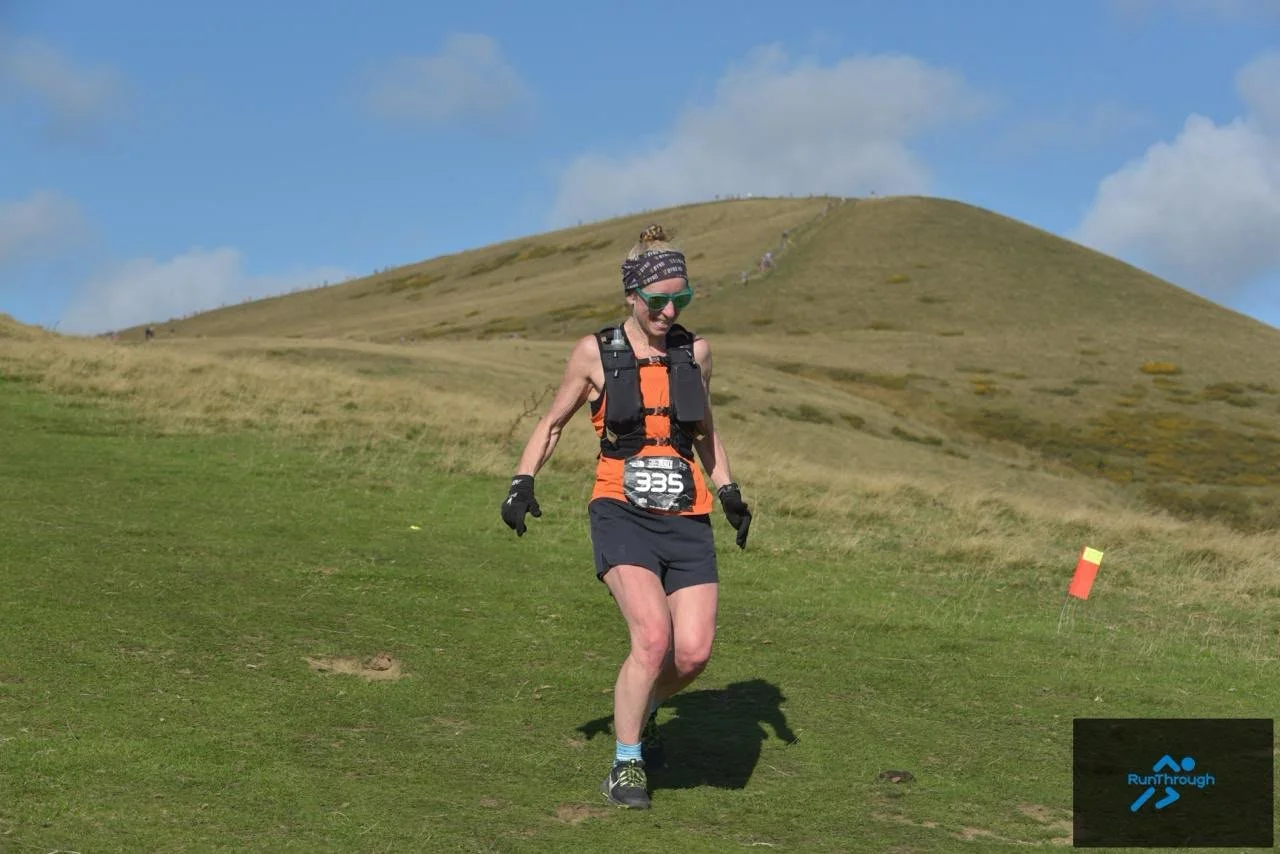
The Downhills…
The downhills
The downhills were where I struggled most. My quads were taking a battering, and I know my technique is where I could improve. I tend to put the brakes on coming down, and I could do with being a bit more confident and efficient on the descents. That's my homework for next time.
The views
They were spectacular. On technical trails you spend so much time looking at your feet, picking your way over boulders, that you can forget where you are. So I reminded myself, many, many times, to look up and take it all in. This is where I love to be.
The hardest moment
At around 16k, about ten miles in, we turned onto a vertical uphill section that nobody could run. It was single file, so your speed was dictated by whoever was in front of you, and because the trails can't be closed, there were walkers on the path too. It was very slow going.
That late in a race, when you're tired and the finish is only a few kilometres away, a section like that is mentally tough. So I used my mantra:
"I haven't come this far to only come this far."
I knew I'd done the training. I knew I was strong. I pulled on all those hard sessions I'd put in over the three months.
Breathwork and mindset on the trail
I do a conscious connected breathing practice before all my sessions and all my races.
I also decide in advance what I'm going to say to myself during the tough periods. I accept there are going to be moments of fatigue, pain or doubt, rather than being surprised by them. Then I channel them into something positive: I choose to do this, and I'm grateful to be out on this beautiful course.
(If you're curious about how breathwork can help your running, I've written more in my breathwork for runners guide.)
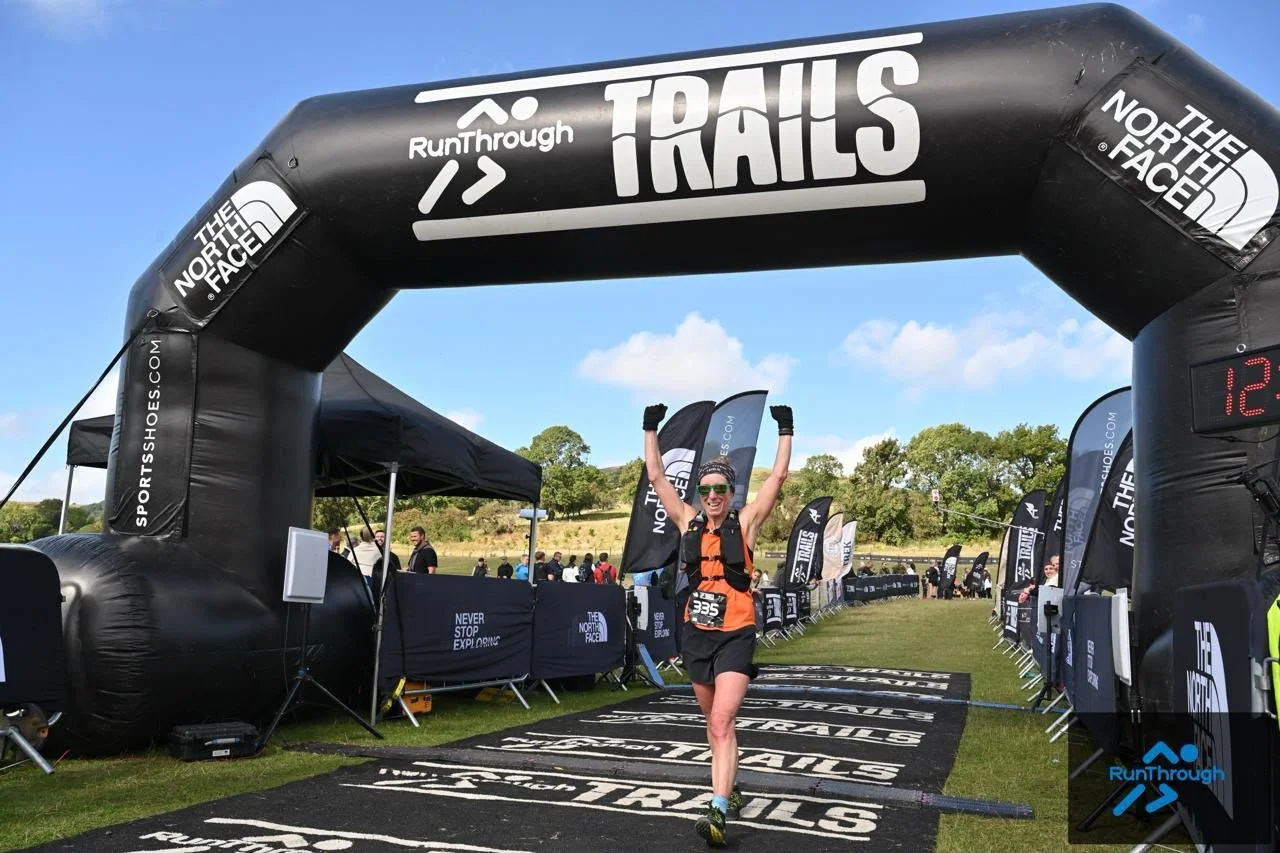
Crossing the finishing line
Crossing the line
I felt really strong coming down the last mile, and I really pushed it. I crossed the line absolutely elated.
It wasn't until I checked the results afterwards that I realised I'd come second in my age category. This was a North Face-sponsored event and a UTMB points race, so lots of people were there to earn points towards a UTMB event. It had sponsored athletes, a lot of youngsters and a seriously strong field. Holding my own in that company felt pretty bloomin' good. I'm still beaming.
What I carried and wore
Like most trail races, Ladybower has mandatory kit. We had to carry:
500ml of water
A foil blanket
A whistle
A waterproof jacket
I used a hydration vest with pockets to carry everything. It was a lovely warm day, so I wore shorts, a vest and a buff on my head.
On my feet: Nike Pegasus Trail. They're really lightweight and responsive, and you can feel the ground underneath you, which I love on technical trails.
Always check the race's own information for the current mandatory kit list, as it can change from year to year.
Running it with Abbie
It was an absolute delight to share the day with Abbie. She'd entered before I did, and she'd done a heap of training. We had a little chat before the start and a post-race coffee afterwards, and it was lovely to have that connection.
Abbie said it was one of the most challenging races she's ever done. But she smashed it, and was really, really strong.
Trusting my process
What it taught me
If I keep showing up and stay consistent, even on the weeks and days when it's tough and there's other stuff going on in my life, the outcome takes care of itself.
That's why the process matters so much. I trust the training. I trust the sessions. I just show up, knowing that's what gives me the best chance of the result I'd like, even though the result is never really the driving factor.
Trusting my own process also meant trusting what I love: trail races, being outdoors, and connecting with like-minded people in the hills of the Peak District. It's exactly what I talk about with the runners I coach, and this race was a very good reminder to practise it myself.
My advice if you're running Ladybower next year
Train on the hills. There's no shortcut. Get hill intervals and hilly long runs into your plan.
Strengthen your legs, especially your quads. Learn from me on this one. Your quads will thank you on the descents.
Smile and enjoy it, even when it gets tough on those really challenging hill sections. Look up and take in the views. You've earned them.
Ladybower Trail Half Marathon FAQs
-
It's super challenging, with around 900m of climbing, steep technical sections and tough downhills. It's also super rewarding.
-
Around 900m. It starts with a steep climb, and later in the race there's a section so steep that nobody can run it.
-
I'd suggest three to four months. Allow four months if you're fairly new and need to build up your distance, or three if you're already running the distance and want to improve your performance.
-
Do it. Practise running downhill regularly so you build confidence and technique, and pair it with strength work for your quads, which take the biggest hit on the descents.
-
Yes, 100%. Focusing on your breathing helps calm your heart rate and calm you down during the hardest moments. I also do a conscious connected breathing practice before every race.
-
Yes, as long as you know it's going to be a heap of climbing and you train for it. Any race can be a first, as long as you're aware of what you're going into and prepare properly.
What are you training for?
I love hearing about people's races, events and challenges, so tell me what you're up to, what you've enjoyed and what your training has looked like.
And if you've got a race of your own in mind for next year, I'll be opening new coaching spaces around December and January. Book a free 20-minute discovery call now to be first in line, and we'll talk about where you are, where you'd like to get to, and whether working together feels like the right fit.